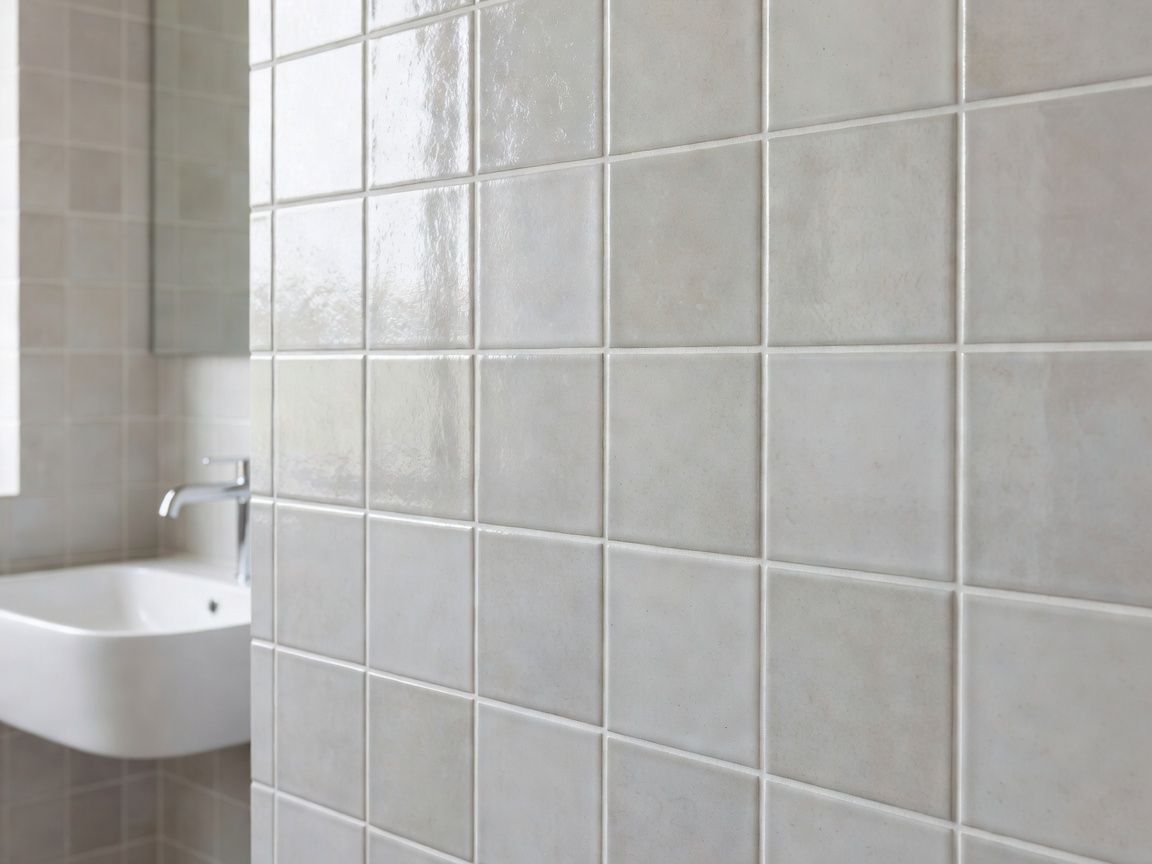
Tile is a modular surface, but a tile schedule requires more than colour and dimensions. Define the room, substrate, exposure, finish, joint layout and edge conditions. Confirm that the selected product is intended for its proposed floor or wall application.
Ceramic, porcelain, glazed and unglazed
Ceramic tile is a broad category of fired clay products. Body composition, firing and surface treatment vary. Porcelain tile is a dense ceramic category, but the name alone does not resolve slip, installation, finish or cleaning decisions. Use the technical information for the exact tile and application.
Glazed tiles have a glass-like surface layer that can carry colour, pattern and sheen. A glaze may be smooth or textured. Its surface characteristics and suitability depend on the specific tile. A glaze can chip under impact, exposing the body beneath. Unglazed tiles have no separate surface glaze and may show colour through the body, though finish and porosity still vary. They can require different cleaning or treatment.
Small-format tiles create more joints and can follow curved or complex surfaces more easily. Their scale can make a floor pattern busy if grout contrast is strong. Large-format tiles reduce the number of joints and create broad visual planes, but they demand careful handling, cutting, substrate preparation and layout. A large tile does not correct an uneven base. Check the installer’s requirements and plan movement joints.
Format, pattern and visual scale
Tile dimensions affect room proportions. A long rectangular format can direct the eye along a corridor; square units establish a different rhythm. A grid, offset pattern, herringbone or stacked layout changes how joints read. Draw the setting-out plan before installation. Account for doorways, niches, drains, corners and exposed edges. Avoid leaving narrow cuts in visually prominent positions unless they are intentional.
Surface texture changes light and cleaning. Glossy glazes reflect highlights and may show water marks. Matte finishes reduce reflection but are not automatically slip resistant. Textured surfaces can add tactile variation and may hold residue. A sample should be viewed under the actual lighting and, for floors, assessed against the intended conditions using reliable product information.
Colour variation between tiles can be deliberate or part of manufacturing. Review more than one sample, particularly for handmade or highly varied surfaces. Blend pieces from multiple boxes if the manufacturer’s laying instructions advise it. Record the expected range in the finish schedule so that natural or production variation is not confused with an unexpected batch change.
Grout, kitchens and wet areas
Grout is a visible part of the surface and a serviceable joint, not simply a filler. Joint width depends on tile type, dimensions, edge finish, setting-out and installation guidance. Choose grout colour in relation to tile tone and the amount of joint contrast desired. Dark grout can show light residue; pale grout can show staining. Cleaning and renewal requirements depend on the grout and environment.
Bathrooms and wet rooms need coordinated waterproofing, falls, drainage, penetrations and movement detailing. Tile and grout do not replace a waterproof layer. Floor tile selection should consider wet conditions and the relevant product information. Small mosaics can help follow falls around a drain because of their joints, but layout and installation still need care. Confirm the entire assembly with the responsible project professional.
Kitchen backsplashes and work-area walls encounter splashes, grease and frequent wiping. Smooth surfaces may be easier to wipe, while textured or handmade surfaces may need more careful cleaning around joints. For floors, consider grit at entrances, dropped items, chair movement and the repair route. Keep spare tiles from the installed batch where matching could matter.
Substrate and installation requirements
Check that the substrate is stable, clean, suitable and prepared to the required flatness. Movement, deflection, moisture or contamination can affect the installation. Select compatible adhesives, primers and grout as a system; the installer should follow current product guidance. Establish movement joints, perimeter gaps and junctions with other materials before tiling. These practical steps influence the result as much as the selected surface.
Good for
- Glazed ceramic for wall applications where its scale, surface and care needs fit.
- Porcelain where a dense fired tile suits the intended floor or wall assembly.
- Small formats for detailed layouts, curves and drain falls when correctly installed.
- Large formats for fewer visual joints where substrate and handling conditions permit.
What to know
No tile type is automatically right for every room. Confirm intended use, finish, slip considerations, setting materials and care instructions for the exact selection. Grout colour and joint design are part of the material decision.
Selection checklist
- Confirm floor or wall use and wet or dry exposure.
- Check format, thickness, surface texture, shade range and edge finish.
- Review layout, cuts, grout colour, movement joints and transitions.
- Confirm substrate condition and compatible setting materials.
- Keep spare tiles and written cleaning guidance for future maintenance.