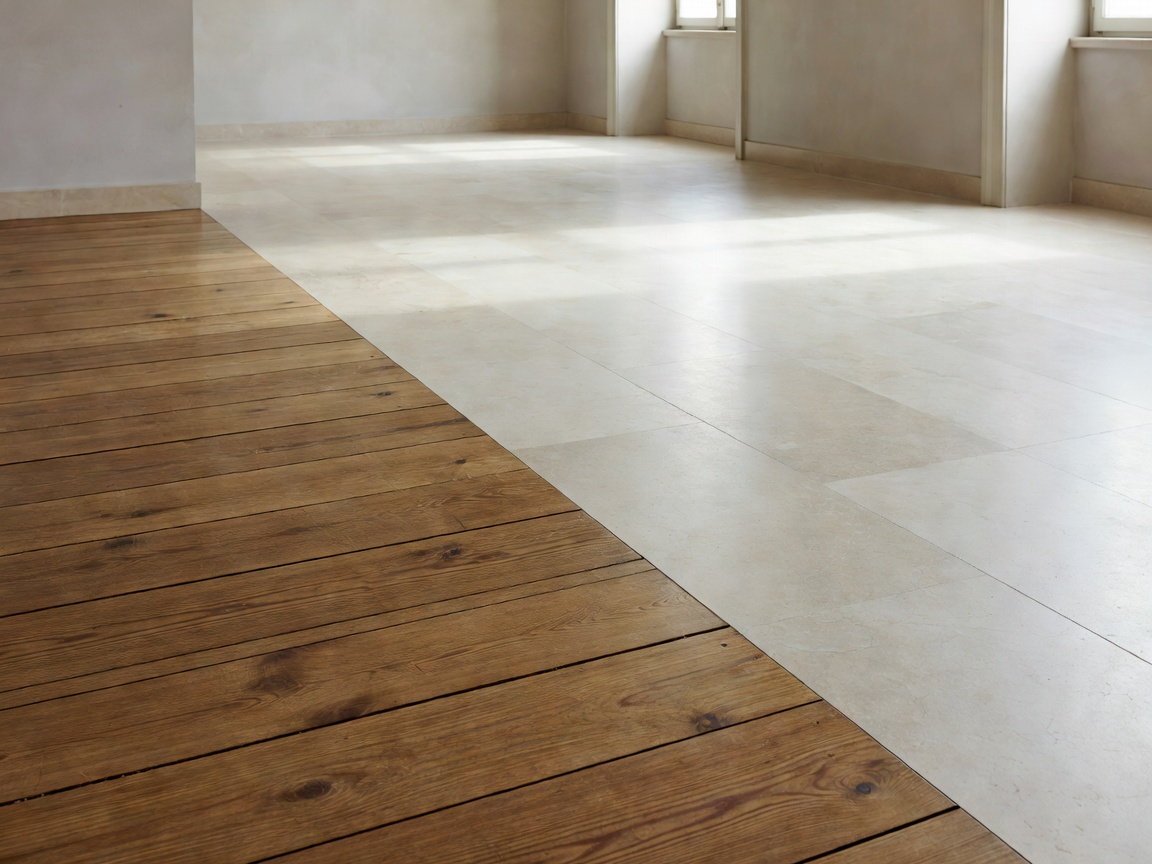
Start with the room, not the sample. Record expected traffic, wet cleaning, direct water exposure, underfloor heating if applicable, acoustic expectations and the condition of the substrate. Then compare surface, construction and installation as one system.
Timber, mineral or manufactured surface?
Solid timber is made from one piece of wood. It has a direct, natural grain and may allow future sanding, depending on its thickness and condition. It responds to changes in moisture and temperature. Movement, acclimatisation and the installation method need attention.
Engineered timber uses a real-wood wear layer over a layered construction. Its structure is designed to reduce movement compared with solid boards, but its suitability still depends on the product build-up and site conditions. Refinishing options depend on wear-layer thickness; do not assume every engineered board can be sanded repeatedly.
Stone flooring offers mineral variation and a substantial feel. Limestone, marble, granite, travertine and slate differ in porosity, hardness, pattern and sensitivity to cleaners. Surface finish changes appearance and maintenance. Stone is heavy, so confirm substrate capacity, setting method and transition details.
Ceramic and porcelain are fired surfaces. Their colour and pattern can be more controlled than natural stone, though production batches and glaze effects can still vary. Porcelain is a ceramic category with a dense body; the relevant choice depends on the intended application and product information. Both need a stable, suitable base and carefully planned joints.
Terrazzo combines aggregate with a binder. It can create a continuous or modular mineral character, depending on its form. Confirm the surface finish, joint layout, installation sequence and care instructions. Resilient flooring covers several flexible sheet, tile and plank categories. It can support a quieter, more uniform floor, but composition, wear layer, indoor conditions and installation vary by type. Check product documentation rather than relying on the category name alone.
Durability, moisture and acoustics
Durability is a combination of material, finish, detailing and use. Grit at an entrance can abrade many finishes. Chair movement, dropped objects and cleaning methods also matter. Stone may chip at exposed edges; timber can dent and show wear; ceramic can crack if support or installation is inadequate. A replaceable plank or tile can make local repair more practical, provided matching material remains available.
Moisture exposure needs a clear definition. Occasional damp cleaning is not the same as standing water, repeated splashing or a wet-room assembly. Timber is moisture-sensitive and needs suitable detailing around thresholds and plumbing. Stone varies in porosity and may need sealing. Tile surfaces may resist water while grout, movement joints and junctions still require correct design. Resilient products have category-specific limits. Confirm the complete floor assembly for the intended room.
Hard surfaces reflect sound. Underlay, resilient layers, room furnishings and the building structure influence impact sound. A soft layer may help in some assemblies but must be compatible with the flooring and substrate. Discuss acoustic requirements before fixing the build-up. The installer should assess flatness, moisture conditions and any heating system requirements before work begins.
Finish, maintenance and total scope
Matte, brushed, honed, polished, textured and smooth finishes alter light, grip, cleaning and the visibility of marks. A polished surface can show reflections and smears. Deep texture can retain dirt. A uniform surface may make repairs easier to disguise, while natural variation can make a patch more visible. View samples in the room’s lighting and request a larger sample where pattern scale matters.
Compare total project scope rather than a single material price. Preparation, levelling, removal, underlay, setting materials, edge profiles, transitions, cutting, waste, access and finishing affect the installed result. Maintenance also has a time cost. Obtain written product-care guidance and keep spare tiles or boards when a future repair would be difficult to match.
Good for
- Timber for warm visual character in living spaces where moisture can be controlled.
- Stone for mineral variation and a surface that can be selected by finish and geological character.
- Ceramic or porcelain for kitchens, entrances and other areas where a hard, cleanable surface is needed.
- Resilient flooring where a continuous, quieter-feeling surface is part of the brief.
What to know
No flooring category is universally best. Confirm the exact product, substrate, installation method, water exposure and care requirements. Sample colour and texture can shift across batches and lighting. Require clear edge, threshold and perimeter details on drawings before installation.
Selection checklist
- Identify room use, traffic and likely water exposure.
- Check the substrate, level, moisture and heating conditions.
- Compare finish, repair route, acoustic build-up and cleaning.
- Record joint, threshold, skirting and transition details.
- Keep product documentation and care instructions with the project file.